

1000000+
Families Protected
700+
Global Patents
10+
Years R&D
Top picks for cleaner kitchen air in modern homes.


Don’t know how to choose?
Choose in 3 stepsCaptures smoke at the source for cleaner kitchen air and more stable ventilation in open kitchens.
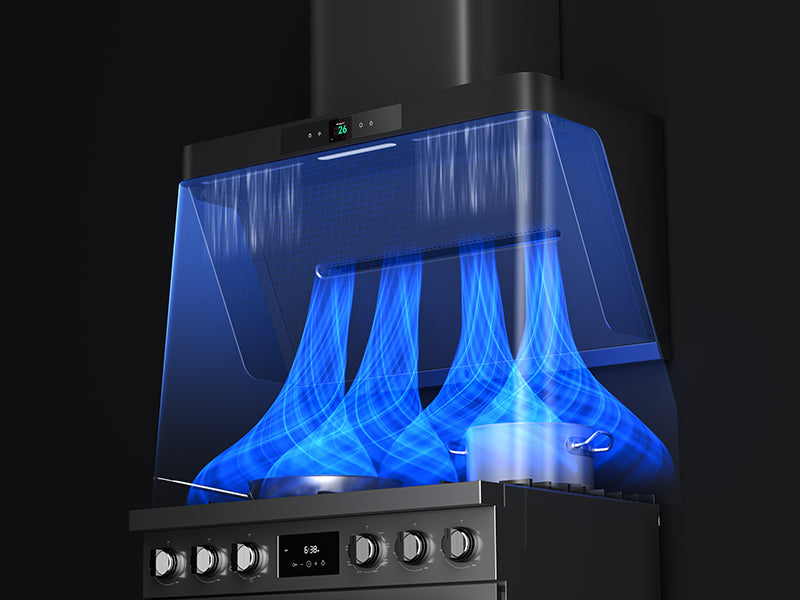
Boosts smoke capture and containment to reduce leakage during real cooking.
Traps smoke, grease, and PM2.5 at the source for cleaner kitchen air.
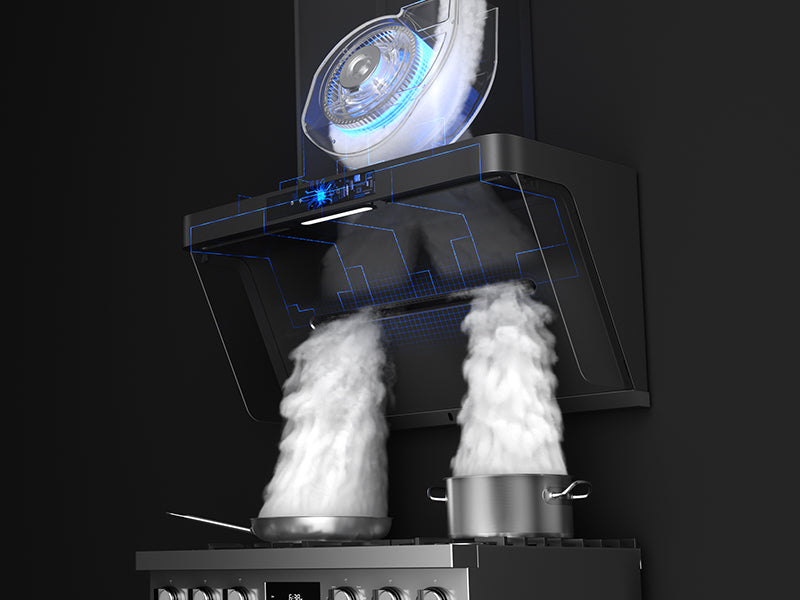
13–16 m/s airflow, comparable to Level-7 wind speed, drives fast smoke capture through a slim, elongated intake.
Keeps smoke capture stable against AC airflow, side drafts, and nearby movement in open kitchens.
Real tests on airflow, odor, noise, and cleaning.
Steak Chef
“Perfect sear, no smoky haze. Steak night stays clean, fresh, and odor-free.”
BBQ Lover
“No lingering smell. No smoky haze. Just pure flavor and clean air.”
Kitchen Upgrade Planner
“With the built-in PM2.5 monitor, cooking indoors stays fresh and smoke-free.”
Steak Lover
“Turned on my Arspura range hood — smoke gone in seconds.”
Healthy Home Lover
“Steak night at home without the lingering cooking smell”
Home Chef
“Whether it’s one pot or many, the Arspura IQV Hood is designed to handle real, multi-dish cooking”
See how Arspura range hoods fit homes nationwide.


Professional in-kitchen service, nationwide.
Book Installation


Fast, secure delivery direct to your door.
More time to decide with extended 90-day returns.
Extended 5-year coverage beyond the standard warranty.
Expert support whenever you need it.
For many homeowners, choosing a new range hood often comes down to one number: CFM (Cubic Feet per Minute). The higher the number, the more powerful the hood must be—right? Not necessarily. Recently, while browsing YouTube videos about Arspura range hood, we came across some interesting comments: "Awesome, it will suck all the AC out your house." "No filters? That's quite dangerous." "It is bad for cold places or too hot places. The power of exhaustion will take all heat / cold Air." These comments highlight three common misconceptions about modern kitchen ventilation: Does a powerful range hood waste heated or cooled indoor air? Is a high CFM rating the only way to achieve good smoke capture? Can a filterless range hood really work safely? Let's look at the engineering behind modern kitchen ventilation. Myth #1: A Powerful Range Hood Always Pulls Your Heated or Cooled Air Outside This is probably the biggest concern among homeowners living in areas with long winters or hot summers. The logic seems straightforward: More airflow = More indoor air exhausted = Higher heating and cooling costs. While there's some truth to that, it only tells part of the story. The real question isn't how much air moves. It's how quickly cooking smoke is captured. Why Traditional Range Hoods Need More Airflow When smoke is allowed to spread throughout the kitchen, the hood must move a large volume of air to collect it. That often means: Higher CFM Longer operating time More conditioned indoor air exhausted outdoors In other words, the hood is trying to clean up smoke after it has already escaped. Arspura's Approach: Capture Smoke Before It Spreads Instead of relying on massive airflow, Arspura focuses on high-velocity source capture. With an industry-leading 16 m/s airspeed, cooking fumes are intercepted the moment they rise from the cookware. Because the smoke is captured closer to its source, the hood doesn't need to move an excessive amount of air to achieve effective ventilation. Rather than moving more air, it moves air more efficiently. Myth #2: Under 400 CFM Means Weak Performance Many shoppers automatically assume that higher CFM equals better performance. It's understandable. After all, product listings often advertise: 900 CFM 1000 CFM 1200 CFM But CFM measures only one thing: The volume of air being exhausted. It does not measure: How quickly smoke enters the hood How effectively cooking fumes are captured How much smoke escapes into the kitchen Airspeed Can Matter More Than Air Volume Imagine two people trying to catch smoke. One uses a huge fan from across the room. The other places a smaller but much faster airflow directly above the stove. The second approach often captures the smoke before it has a chance to spread. That's the principle behind Arspura's high-velocity airflow design. Instead of relying solely on higher airflow volume, it combines optimized airflow pathways with fast intake velocity to improve capture efficiency. Traditional High-CFM Hood Arspura High-Velocity Hood High airflow volume High airflow velocity Smoke captured after spreading Smoke captured at the source Often requires larger exhaust airflow Designed to operate below 400 CFM Greater indoor air replacement More efficient source capture The goal isn't simply to move more air. The goal is to prevent smoke from escaping in the first place. Myth #3: No Filter Means Less Protection Another common concern is: "If there's no filter, won't grease damage the motor?" This assumption makes sense because nearly every traditional range hood relies on metal mesh filters. But filters aren't the only way to manage grease. Why Traditional Range Hoods Need Filters In conventional designs, grease-laden air passes through metal mesh filters. These filters trap grease before it reaches the blower. Over time, however, they also become: Grease buildup points Airflow restrictions Regular cleaning chores As grease accumulates, airflow resistance increases and ventilation performance gradually declines. Many homeowners eventually notice weaker suction—not because the motor has become less powerful, but because the filters have become clogged. How Can a Filterless Range Hood Work? A filterless range hood doesn't simply remove the filter. It redesigns how grease is managed throughout the entire airflow system. Step 1: High-Speed Blower Expels Most Grease Outdoors During cooking, the high-speed blower captures cooking fumes at the source and exhausts most of the grease-laden air outdoors. Only a small amount of grease naturally adheres to the blower housing during operation. Instead of accumulating inside the system, that remaining grease is directed toward the oil collection cup as it drains from the blower. Step 2: Reverse Rotation Automatically Cleans the Blower This is where Arspura's Reverse Rotation Oil Separation System comes in. After cooking, the blower automatically rotates in the opposite direction. The reverse rotation generates centrifugal force that spins off the small amount of grease remaining on the blower surfaces. The grease is then collected in the removable oil cup instead of building up inside the motor compartment. This self-cleaning process helps maintain consistent airflow performance over time without requiring homeowners to remove and wash metal mesh filters. Rather than asking homeowners to clean grease-covered filters every few weeks, Arspura keeps the blower cleaner through automatic self-maintenance. What About Make-Up Air? Many U.S. homeowners have also heard about make-up air requirements, especially for larger range hoods. In many jurisdictions, ventilation systems above 400 CFM may require additional make-up air systems to replace exhausted indoor air. While local building codes always take precedence, designing a range hood to operate below 400 CFM can help reduce the complexity associated with higher-airflow ventilation systems. Combined with high-velocity source capture, Arspura delivers strong cooking-fume removal without relying on excessive exhaust airflow. Instead of exhausting more conditioned indoor air, it focuses on capturing smoke more efficiently. Smarter Kitchen Ventilation Isn't About Bigger Numbers For years, consumers have been taught to compare range hoods by one specification: CFM. But modern kitchen ventilation is evolving. A well-designed range hood isn't defined by how much air it moves. It's defined by how effectively it captures cooking fumes before they spread, how consistently it performs over time, and how little maintenance it requires. With high-velocity source capture, airflow below 400 CFM, and an automatic reverse-rotation self-cleaning system that eliminates the need for mesh filters, Arspura represents a different approach to kitchen ventilation—one that focuses on smarter engineering rather than simply bigger airflow numbers. If you're shopping for a new kitchen ventilation system, it may be time to ask a different question. Instead of "How high is the CFM?" ask "How efficiently does it capture smoke?" [[related_products_1]] FAQ Q1: Does a high CFM range hood always remove more smoke? Not necessarily. While higher CFM moves more air, smoke capture also depends on airflow velocity, hood design, and how quickly fumes are captured before spreading. A well-designed high-velocity range hood can achieve excellent capture efficiency without relying solely on extremely high airflow. Q2: Are filterless range hoods safe? Yes—when they are engineered with an effective grease management system. Instead of relying on removable mesh filters, Arspura's design exhausts most grease outdoors while automatically removing residual grease from the blower through a reverse-rotation self-cleaning process, helping maintain long-term performance without manual filter cleaning.
Many American kitchens still rely on microwave hoods for ventilation. However, after years of use, these recirculating systems may no longer meet the needs of modern cooking. Learn why more homeowners are replacing microwave hoods with powerful range hoods for better smoke capture, cleaner air, and a more comfortable kitchen.
Check mounting height 27.1"–29.13" & cabinet min 35.43" width (with required openings). Unsure? Contact our customer support team.
Because capture performance depends on how fast air pulls smoke at the source, not just air volume.
Arspura hoods are ducted-only. If you don’t have a vent hole, you can still install it by cutting a new opening and running ductwork to an exterior vent—this may require kitchen modification, so we recommend professional installation support.
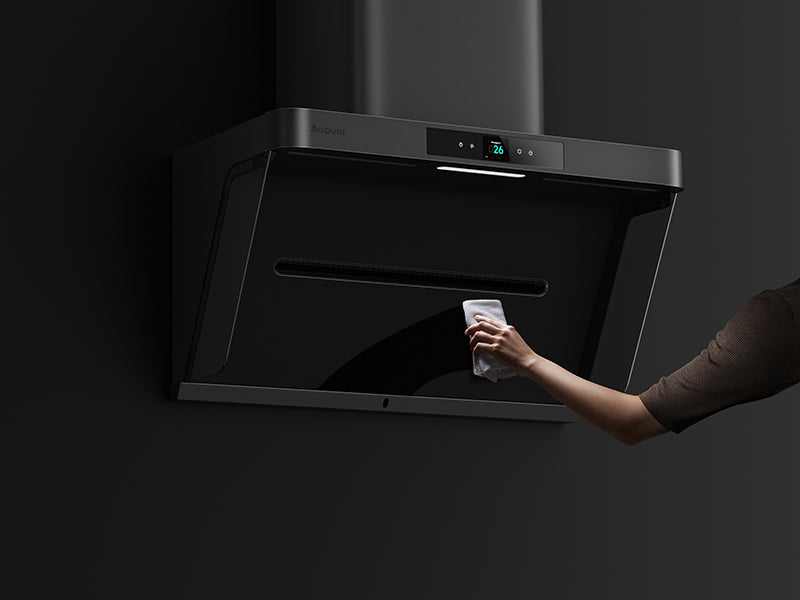
No. Arspura uses a filter-free design, so routine care is mainly a quick wipe-down.
Arspura hoods do not provide make-up air. IQV is optimized for high-speed source capture, so it typically won’t noticeably disrupt HVAC in most homes.